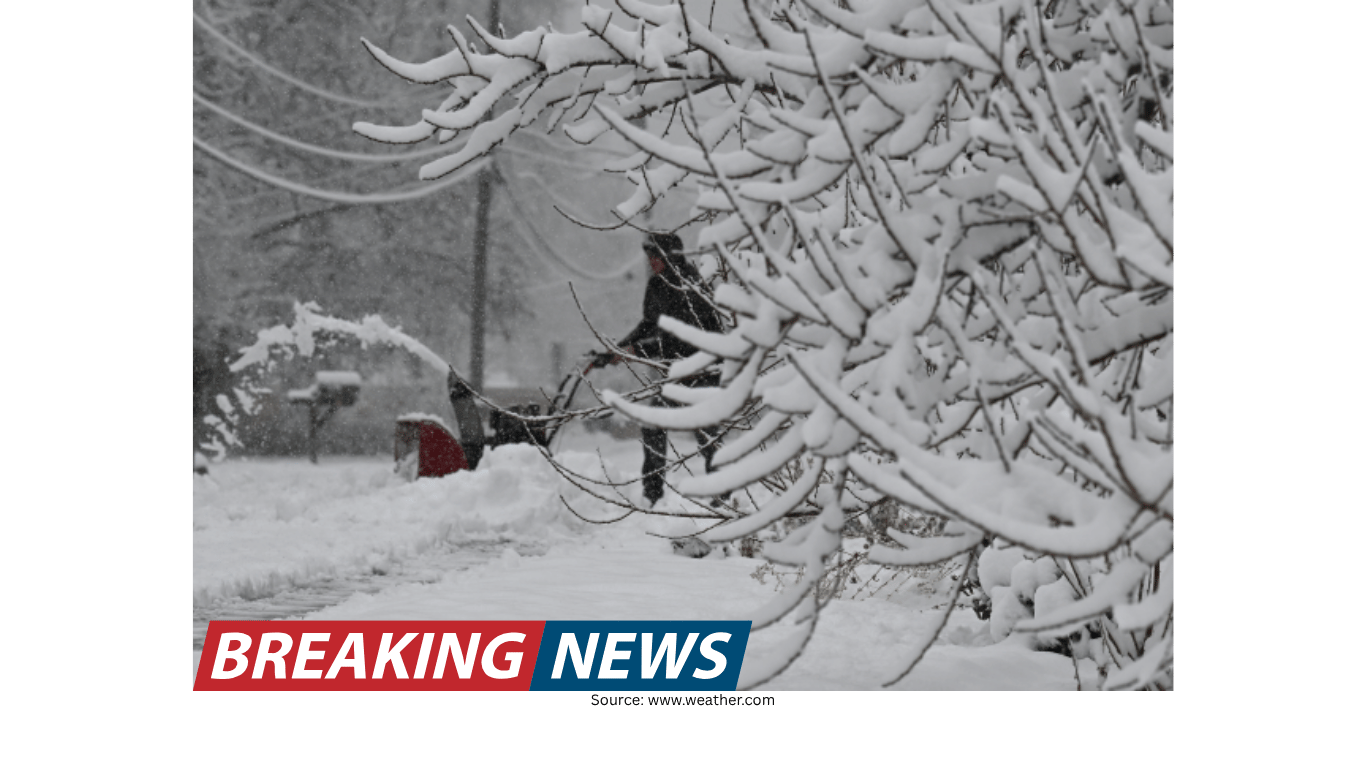
A Late-Season Winter Storm Could Target the Mid-Atlantic and Northeast This Weekend

A warm stretch, then a reminder that winter isn’t finished
After a period of unusually mild, comfortable weather, attention is turning back to a familiar seasonal threat: a winter storm expected to head toward the mid-Atlantic and Northeast this weekend. The shift in the outlook underscores how quickly conditions can change during winter, even after several days that feel more like an early preview of spring.
The broad message from forecasters is straightforward: winter is still going strong. While recent warmth may have lowered people’s guard, the developing pattern suggests that colder, stormier weather can still return with little notice. For many communities, that means keeping an eye on the forecast and being prepared for a range of possible outcomes.
What’s expected this weekend
Meteorologists are tracking a winter storm that is projected to move toward the mid-Atlantic and the Northeast over the weekend. At this stage, the storm is best described as a developing situation rather than a locked-in forecast. The general track points toward heavily populated corridors, but the specific impacts—if they occur—are still not certain.
That uncertainty matters because winter storms can produce very different results depending on small changes in timing, storm track, and temperature profiles. In some cases, a forecast that begins with broad regional concern can narrow into a more localized event. In others, the risk area can expand as new data becomes available. The key point for now is that the weekend forecast is active and evolving.
Uncertainty remains about impacts—possibly even whether impacts happen
Forecasters emphasize that there is still uncertainty in the potential impacts, if any. That phrasing is important. It signals that while a storm is expected to approach the region, the degree to which it will translate into disruptive weather is not yet clear.
For the public, uncertainty can be frustrating, especially when planning travel, work schedules, or weekend activities. But it is a normal part of early storm forecasting. Winter storms are sensitive to small atmospheric differences, and early guidance often changes as a storm draws closer and the observational picture becomes clearer.
In practical terms, uncertainty means people should avoid overreacting to a single forecast update—whether it looks severe or minimal—and instead follow the trend over time. It also means that preparedness steps should be proportionate: enough to avoid being caught off-guard, but not based on assumptions that may not hold as the forecast is refined.
Why the Northeast is being urged to monitor the situation
Even with uncertainty, the Northeast is being advised to monitor the situation for the latest information. This is a common recommendation when a storm is on the horizon and the range of possible outcomes still includes meaningful impacts.
Monitoring matters because winter weather hazards can emerge quickly. A storm that is still being evaluated days in advance can become more defined within a short window, and the most useful guidance for decision-making typically arrives closer to the event.
For residents, commuters, and travelers, monitoring the forecast can help answer practical questions as they become clearer:
Whether the storm’s main effects are likely to reach a specific area.
How the timing could line up with weekend travel or events.
Whether conditions could deteriorate rapidly during certain periods.
Whether the storm’s impacts appear to be increasing or decreasing with each update.
What “still going strong” can mean in late winter
The reminder that winter is “still going strong” reflects a broader reality of the season: warm spells do not necessarily signal that winter hazards are over. In many parts of the mid-Atlantic and Northeast, late-season storms can still occur, and the atmosphere can swing between mild and wintry patterns.
When mild conditions arrive, people often shift routines—driving habits, clothing choices, and household preparations. A quick return to winter weather can catch communities off balance, particularly if the change occurs over a weekend when many people are on the move.
This is why meteorologists often frame late-season storms as reminders. The point is not to alarm, but to reintroduce a level of seasonal awareness that can fade during extended warmth.
How to interpret early storm coverage
Early storm coverage often contains two messages that can seem contradictory: a storm is coming, and impacts are uncertain. Both can be true at the same time. A storm system may be well established in the forecast models, but the exact consequences for any given city or county may depend on details that are not yet resolved.
In these situations, it helps to separate the existence of the storm from the confidence in specific outcomes. The storm’s approach can be a credible signal, while the fine-grained questions—how far north or south the strongest effects set up, and how long they last—may remain open.
The most responsible approach for audiences is to treat early information as a heads-up rather than a final verdict. The goal is to be ready to adapt plans if later updates point to stronger impacts.
Planning for the weekend: staying flexible
With a winter storm potentially affecting the mid-Atlantic and Northeast this weekend, flexibility becomes a practical strategy. If you have travel plans, outdoor activities, or time-sensitive commitments, it may be wise to build in contingencies—such as alternate departure times or backup plans—until the forecast becomes clearer.
Because the storm’s impacts are not yet certain, the best planning posture is conditional: be prepared to adjust if later updates indicate a higher likelihood of disruptive weather, and be ready to proceed normally if the storm’s effects trend weaker or shift away from your area.
For people who make decisions for groups—families, organizations, or workplaces—monitoring updates can also help with communication. When uncertainty is still high, it can be more useful to share what is known (a storm is being tracked) and what is not yet known (the specific impacts), rather than projecting certainty too early.
What forecasters are saying now
The current message from meteorologists is to keep watching the forecast. Meteorologist Sara Tonks has provided the latest update on the developing situation, highlighting both the storm’s approach and the uncertainty around what it will ultimately mean on the ground.
That combination—tracking a storm while emphasizing uncertainty—is typical at this stage of a developing event. It reflects an effort to alert the public without overstating confidence in details that may still change.
Key takeaways to keep in mind
A winter storm is expected to head toward the mid-Atlantic and Northeast this weekend.
Recent warm weather does not mean winter hazards have ended; winter is still active.
There is still uncertainty regarding potential impacts, including the possibility of limited impacts.
The Northeast is encouraged to monitor the situation and follow the latest updates as the forecast evolves.
Staying informed as the forecast evolves
As the weekend approaches, the most valuable information will be the newest information. Forecast confidence typically improves as a storm gets closer, and updates can clarify the likely timing and the areas most at risk for wintry conditions.
For now, the situation is best viewed as an active watch period: a storm is on the forecast map, but the details are still being refined. If you live in the mid-Atlantic or Northeast, keeping track of the latest forecast updates is the simplest way to avoid surprises and make decisions based on the most current outlook.
Whether the storm ultimately brings significant winter weather or ends up producing minimal effects, the broader lesson remains the same: even after a warm stretch, winter can reassert itself quickly—and paying attention early can make the next update easier to act on.