
Midwest and Plains Severe Weather Outbreak: What We Know So Far
A fast-moving outbreak leaves communities assessing damage
Towns across the Midwest and Plains are picking up the pieces after a severe weather outbreak spawned numerous damaging tornadoes that killed at least eight people and injured dozens more. As daylight returned and damage surveys began, the scope of destruction became clearer in some of the hardest-hit areas, including parts of Michigan and Oklahoma.
While the most intense impacts described so far center on specific communities, the broader weather pattern remained active. Storms were ongoing, with expectations for damaging winds, large hail and a few tornadoes to continue affecting parts of the South and Midwest. That combination—recovery in some places alongside renewed risk in others—has shaped the response for residents, volunteers and officials.
Fatalities and injuries reported in multiple locations
Authorities reported deaths and injuries in several communities during the outbreak. The following locations were among those specifically identified:
- Union City, Michigan: Three people were reported dead and 12 injured.
- Edwardsburg, Michigan: One person was reported dead, with several others injured.
- Major County, Oklahoma: Two deaths were reported related to Thursday night’s severe weather.
In addition to those reports, officials in Oklahoma also described fatalities and injuries connected to tornado damage in Okmulgee County. Taken together, the reports underscore how a single outbreak can create multiple, separate emergencies across a wide region.
Union City, Michigan: EF3 tornado confirmed
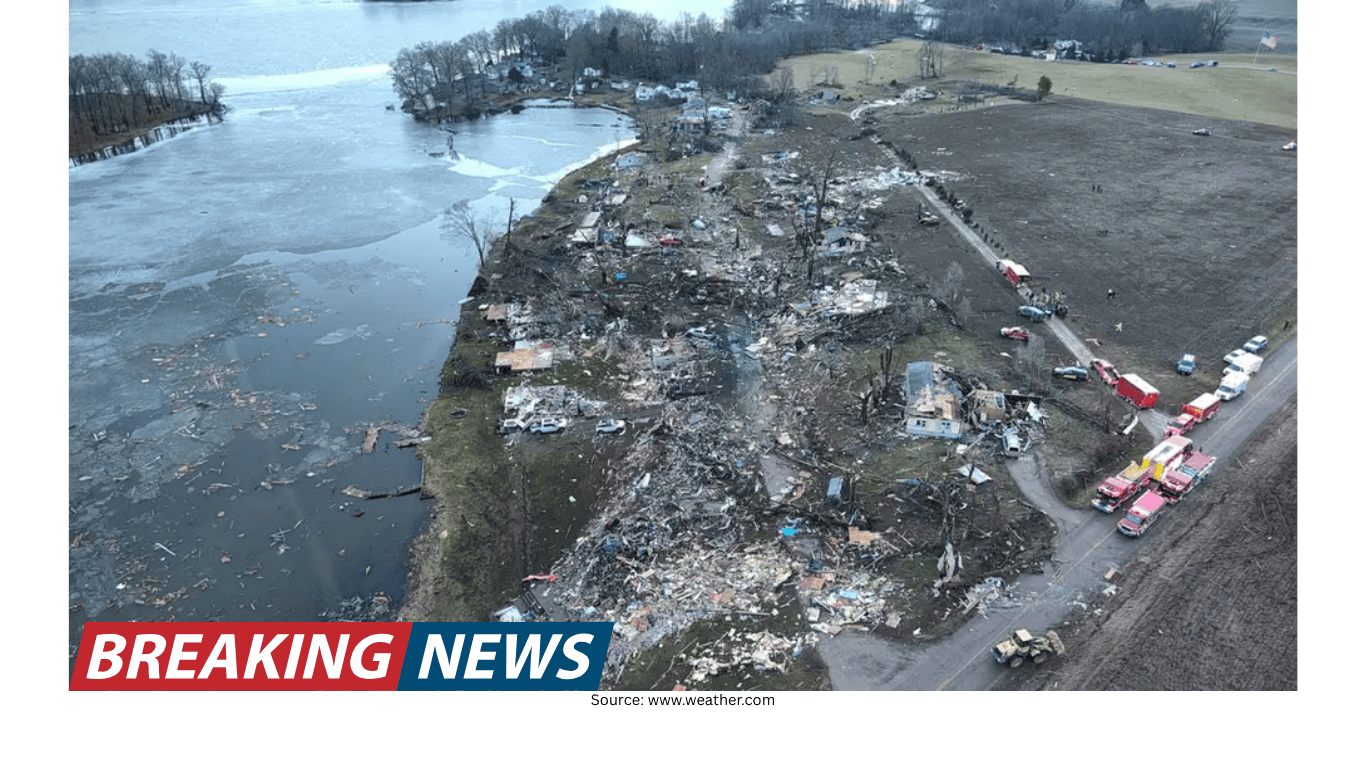
Some of the most severe damage occurred Friday evening in Union City, Michigan, a town of about 1,700 located just west of Interstate 69 in the southern part of the state. Homes along the St. Joseph River were destroyed, with structures left unrecognizable after the tornado passed through.
On Saturday afternoon, a National Weather Service damage survey confirmed an EF3 tornado with winds estimated at at least 150 mph struck the area. The confirmation marked the first EF3 tornado in Michigan since 2022, a notable threshold for the state in terms of tornado intensity.
Accounts from residents illustrate how quickly the situation escalated. Lisa Piper recorded video from her back deck as a funnel cloud formed across frozen Union Lake and then dropped toward the ground. In the footage, trees were torn from their roots and debris was lofted into the air as the tornado intensified.
Her narration captured the shock of the moment. “It’s lifting houses!” she said, and as the destruction continued: “Oh my heart is pounding. Oh, I hope they’re OK.”
Damage to community landmarks and the start of cleanup
Beyond homes and trees, the tornado also affected community spaces. Part of the First Congregational United Church of Christ in Union City was damaged. The church noted in a Facebook post that its nearly 150-year-old grand piano was spared, a detail that stood out amid the broader damage.
In the immediate aftermath, volunteers helped residents sift through rubble and begin cleanup. The work described included sorting through debris, surveying flattened homes, and starting the long process of clearing what the storm left behind. In disasters like this, early cleanup can be both practical and emotional—an attempt to restore order while families and neighbors absorb what happened.
Michigan’s tornado context and state response
Michigan experiences tornadoes, but not at the frequency seen in some Plains states. According to David Roth, a meteorologist at the Weather Prediction Center in College Park, Maryland, Michigan averages about 15 tornadoes a year. That figure is far lower than Texas (155) and Kansas (96), numbers that highlight how tornado risk varies across the country.
Even with a lower annual average, the state can still face high-impact events. In response to the outbreak, Gov. Gretchen Whitmer activated Michigan’s Emergency Operations Center on Friday “to coordinate an all-hands-on-deck response to severe weather,” according to her statement. Activating an operations center is a step aimed at coordinating resources and communication as local jurisdictions manage immediate needs.
Oklahoma: Tornado damage in Okmulgee County
In Oklahoma, officials described a tornado that carved a path of damage in Okmulgee County, about 30 miles south of Tulsa. Jeff Moore, the county’s emergency manager, said the tornado cut around a 4-mile path. He noted that more details would not be clear until daybreak, reflecting how nighttime storms can complicate early assessments.
Authorities said two people were killed and two others were taken to a hospital. The impacts included downed electrical lines and toppled large trees. Power outages affected more than 1,600 people, according to poweroutage.us, adding another layer of urgency as crews worked to clear roads and restore access.
Moore described the pace of the response: “We’re just getting everywhere as fast as we can, clearing roads as fast we can.” That kind of effort is often essential in the first hours after a tornado, when blocked routes can delay medical assistance, damage checks and utility repairs.
Damage from suspected tornadoes was also reported in northern parts of Tulsa, indicating that the storm impacts were not confined to a single county.
Major County, Oklahoma: Fatal vehicle strike near Fairview
Separately, officials in Major County reported a deadly incident tied to Thursday night’s severe weather. A mother and daughter were killed after their vehicle was hit by a tornado near Fairview, Oklahoma. The Major County Sheriff’s Office told KOCO News that the woman was driving near State Highway 60 and 243 when the vehicle was struck.
Vehicle-related tornado fatalities can occur when storms develop quickly or when visibility is limited. The report underscores how dangerous severe weather can be for people caught in transit, particularly during fast-evolving conditions.
Ongoing storm threat as recovery begins
As communities in Michigan and Oklahoma began cleanup and damage assessments, the broader severe weather setup was not yet finished. Storms were ongoing, and the forecast called for damaging winds, large hail and a few tornadoes across parts of the South and Midwest.
This overlap—response operations in one area while other areas remain under threat—can strain local and regional resources. It also heightens the importance of clear communication from officials and weather services, especially for residents who may be dealing with power outages, debris, or disrupted travel routes.
What the reports show about tornado impacts
The details emerging from this outbreak reflect several recurring realities of tornado disasters:
- Damage can be highly concentrated: In Union City, homes along the St. Joseph River were described as destroyed and left unrecognizable, illustrating how a tornado’s most intense winds can devastate specific corridors.
- Nighttime events complicate assessment: In Okmulgee County, officials indicated that clearer details would come by daybreak, a common challenge when storms strike after dark.
- Infrastructure impacts add urgency: Downed lines, blocked roads and large-scale power outages can slow response and deepen disruption for residents.
- Severe weather risk is not limited to high-frequency states: Michigan’s lower annual tornado average does not prevent rare but intense events, as shown by the EF3 confirmation.
Looking ahead
In the coming days, the immediate priorities in the hardest-hit communities will likely remain focused on safety checks, debris removal, and support for those displaced or injured. At the same time, the continuing storm threat means some areas may need to stay prepared for additional rounds of severe weather, including damaging winds, large hail, and the possibility of more tornadoes.
For now, the confirmed EF3 in Union City, the reported deaths and injuries across Michigan and Oklahoma, and the ongoing cleanup efforts provide a snapshot of a wide-reaching outbreak whose full impact is still being measured.
Information from the Associated Press was used in this report.