
Springs Fire Near Lake Perris Grows Past 4,100 Acres as Gusty Winds Complicate Containment
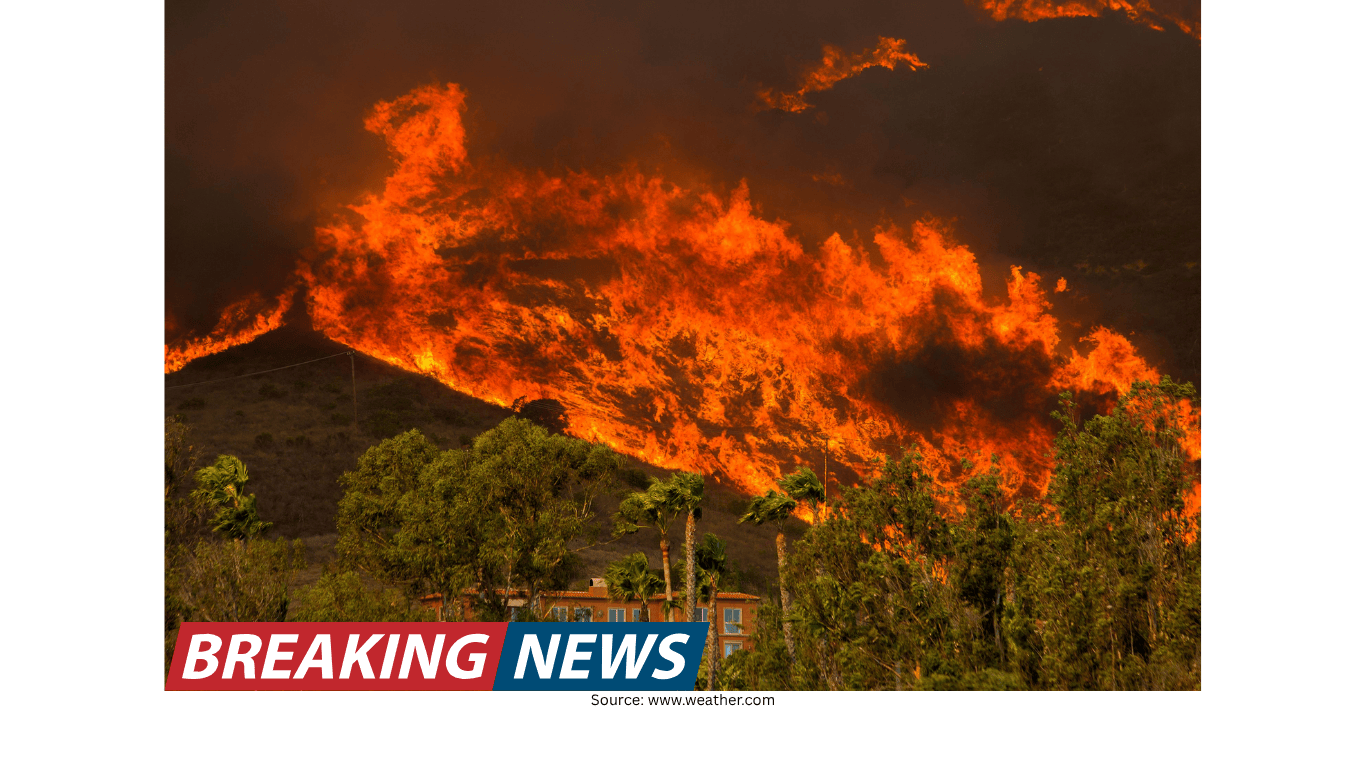
A fast-moving fire near Lake Perris
The Springs Fire has burned more than 4,100 acres near Lake Perris in Riverside County, California, after igniting Friday morning. Fire activity has remained a major concern as crews work to slow the spread and protect nearby areas. Officials have not reported any deaths, and the cause of the fire remains under investigation.
While wildfires are often defined by the size of the burn area, the Springs Fire is also being shaped by the weather and the immediate impacts on surrounding communities. Wind gusts up to 50 mph have been reported, creating difficult conditions for firefighters and contributing to the fire’s continued growth. As a result, containment has remained limited, with the blaze reported at 10% contained.
Containment remains limited amid strong winds
Fire containment is a measure of how much of a fire’s perimeter has been secured by control lines that are expected to hold. In this case, the Springs Fire is reported to be only 10% contained. That figure underscores how challenging it can be to establish and maintain control lines when winds are strong and variable.
Wind gusts up to 50 mph are complicating firefighting efforts. Strong winds can push flames into unburned fuel, increase spotting, and make it harder for aircraft to operate effectively. Even when crews make progress in one area, shifting gusts can quickly change the fire’s behavior and force resources to reposition.
These weather conditions are also significant for residents and anyone traveling through the region. High winds can carry smoke farther from the fire area, affecting air quality and visibility beyond the immediate burn zone. They can also contribute to rapid changes in fire direction, which is why evacuation decisions and public-safety messaging can evolve quickly during wind-driven events.
Evacuations ordered east of Moreno Valley
Evacuations have been issued east of Moreno Valley as the Springs Fire continues to burn near Lake Perris. Evacuation orders are typically used to move people out of areas where fire behavior, smoke, or access constraints could pose a threat. In wind-driven situations, evacuations may be especially important because fire conditions can change rapidly.
For those affected, Valley View High School is serving as a temporary shelter. Temporary shelters provide a central location for evacuees to go when leaving home, particularly when the duration of displacement is uncertain. They can also help emergency managers coordinate assistance and share updates with people who may not have access to regular communication channels.
Even for residents outside evacuation zones, the combination of active fire and strong winds can still cause disruptions. Road conditions, smoke, and public-safety operations may affect travel patterns and access to certain areas near the fire.
Schools and air quality: Moreno Valley College closes main campus
The Springs Fire is also affecting daily life through air-quality impacts. Moreno Valley College has closed its main campus due to poor air quality. Smoke from wildfires can reduce air quality quickly, and closures are one way institutions respond when conditions may not be safe for students, staff, and visitors.
Poor air quality can be an issue even at some distance from the fire, particularly when winds transport smoke into populated areas. In addition to the immediate health considerations, closures can create logistical challenges for families and workers, especially when the duration of the incident is unknown.
While the fire response continues, air-quality concerns remain a central part of the broader impact picture, alongside evacuation orders and the ongoing effort to increase containment.
More than 250 personnel deployed with engines and helicopters
Firefighting operations on the Springs Fire involve more than 250 fire personnel. Crews are battling the flames using engines and helicopters, reflecting a multi-pronged approach commonly used on large incidents.
Engines are typically used for structure protection, patrol, and direct suppression where conditions allow.
Helicopters can support firefighting by providing aerial water drops and helping crews access areas that may be difficult to reach by road.
The use of both ground and aerial resources suggests an effort to slow the fire’s spread while also addressing immediate threats. However, the same wind gusts complicating containment can also influence how and when aircraft can be used, and can affect the effectiveness of suppression tactics overall.
What is known—and what remains under investigation
At this stage, several key facts have been reported: the Springs Fire has burned more than 4,100 acres, it is 10% contained, and it is burning near Lake Perris in Riverside County after igniting Friday morning. Evacuations have been issued east of Moreno Valley, with Valley View High School serving as a temporary shelter. Moreno Valley College has closed its main campus due to poor air quality. More than 250 fire personnel are assigned to the incident, using engines and helicopters. No deaths have been reported.
At the same time, important questions remain unanswered. The cause of the fire is under investigation. That means officials have not yet provided a determination on how the fire started. During active incidents, investigations can take time, particularly when access to the origin area is limited by ongoing fire activity or safety concerns.
Community impacts extend beyond the fire line
The Springs Fire is not only a story of acreage and containment; it is also a story of how a fast-developing wildfire affects a community in real time. Evacuations represent a major disruption for households, and the need for a temporary shelter highlights the immediate human dimension of the incident.
Meanwhile, the closure of Moreno Valley College’s main campus points to a broader regional impact driven by smoke and air quality. Even when flames are not directly threatening a particular location, smoke can influence decisions about whether it is safe to hold classes, conduct outdoor activities, or keep public spaces open.
Firefighting operations themselves can also reshape daily routines. The movement of engines, the presence of helicopters, and the need to manage access around the fire area can affect traffic patterns and the availability of certain routes. In active incidents, these conditions can change quickly, particularly when strong winds are involved.
Why wind is a defining factor in this incident
Wind gusts up to 50 mph have been a central factor in the Springs Fire response. High winds can intensify fire behavior and complicate suppression by making it harder to predict where the fire will move next. They can also increase the risk of embers being carried ahead of the main fire, potentially igniting spot fires.
For firefighters, wind can limit tactical options and force a more cautious approach in certain areas. For residents, wind can mean that smoke conditions shift rapidly and that evacuation decisions may need to be made quickly. The combination of limited containment and strong gusts helps explain why the situation remains dynamic.
Current status at a glance
Location: Near Lake Perris in Riverside County, California
Start time: Ignited Friday morning
Size: More than 4,100 acres burned
Containment: 10% contained
Weather factor: Wind gusts up to 50 mph complicating firefighting efforts
Evacuations: Issued east of Moreno Valley
Shelter: Valley View High School serving as a temporary shelter
Air quality impact: Moreno Valley College closed its main campus due to poor air quality
Response resources: More than 250 fire personnel using engines and helicopters
Cause: Under investigation
Fatalities: No deaths reported
What to watch as operations continue
As the Springs Fire response continues, the key indicators of progress will include changes in containment, the fire’s acreage, and any adjustments to evacuation orders. Because wind has been a major complication, ongoing gusty conditions may continue to influence how quickly crews can strengthen control lines and how effectively aircraft can support ground operations.
Air quality will also remain an important concern, as shown by the closure of Moreno Valley College’s main campus. Smoke impacts can persist even when fire activity fluctuates, and they can affect communities well beyond the immediate vicinity of the burn area.
Officials have not reported any deaths, and the cause remains under investigation. For now, the focus remains on firefighting efforts, community safety measures, and the evolving conditions driven in part by strong winds near the fire area.