
Bay Area Residents Awakened by Shallow 4.6 Earthquake Near Boulder Creek
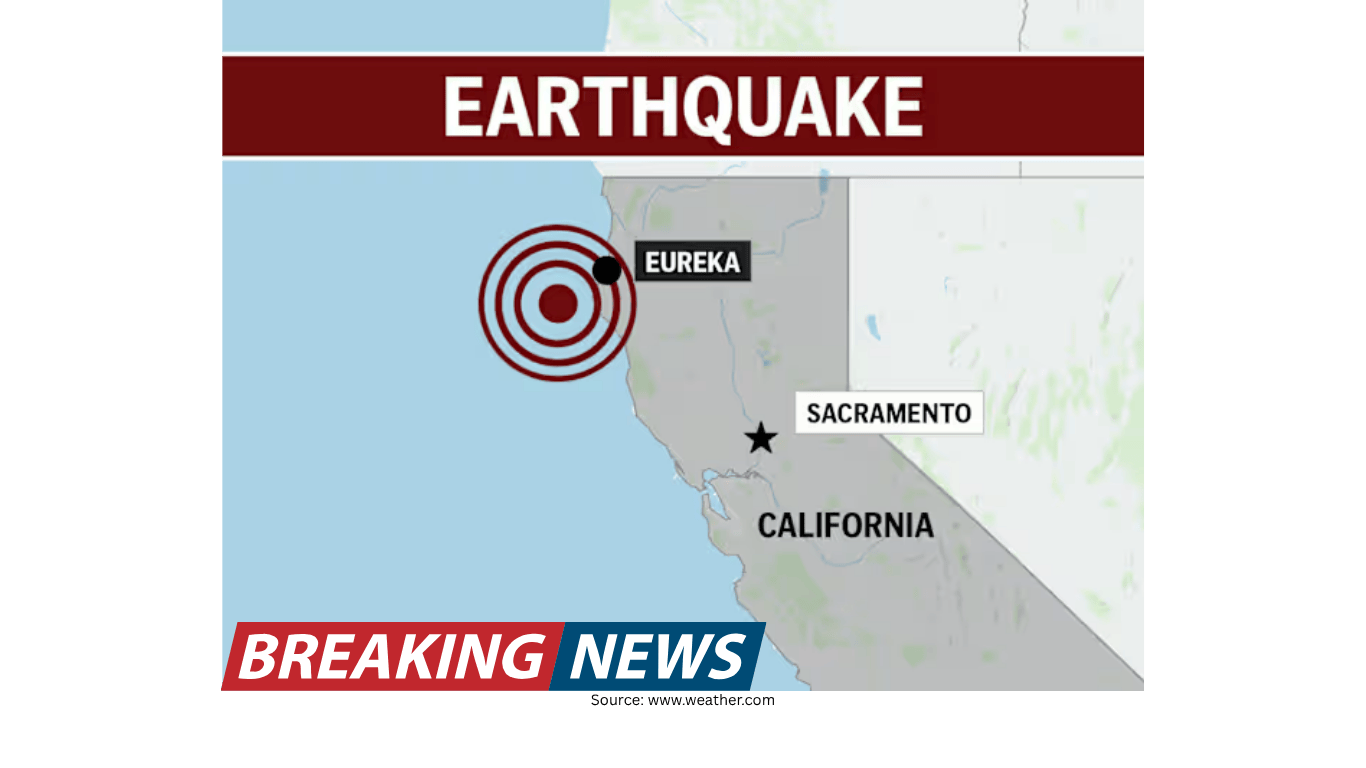
A widespread wake-up call across the Bay Area
Millions of people across California’s Bay Area were jolted awake early Thursday when an earthquake struck near Boulder Creek. While the shaking was strong enough to be widely felt—and to prompt many residents to reach for their phones in the middle of the night—there were no reports of significant damage in the immediate aftermath.
The quake occurred at 1:41 a.m. local time (4:41 a.m. EDT). The U.S. Geological Survey reported the event as a magnitude 4.6 earthquake located just outside of Boulder Creek, California, roughly 60 miles south of San Francisco. The tremor was described as shallow, reported at less than 7 miles below the surface, a characteristic that can contribute to more noticeable shaking near the epicenter.
Even moderate earthquakes can feel intense when they occur at night, when people are asleep and homes are quiet. In this case, the timing amplified the experience for many residents, who quickly shared their reactions and observations online. The shaking was felt widely, and the rapid spread of personal accounts underscored how far the tremor reached across the region.
Where and when it happened
According to the U.S. Geological Survey, the earthquake was recorded at 1:41 a.m. local time. Its reported location was just outside Boulder Creek, a community in the Santa Cruz Mountains area. The epicenter was approximately 60 miles south of San Francisco, placing it within a broader region that includes many densely populated communities.
The reported depth—less than 7 miles—matters because shallow earthquakes often produce stronger shaking at the surface than deeper events of the same magnitude. While the magnitude of 4.6 is not considered a major earthquake, a shallow quake can still be startling, especially when it happens without warning in the early hours of the morning.
In the hours following the quake, there were no reports of significant damage. That early assessment aligned with the U.S. Geological Survey’s evaluation that the risk of major damage or deaths was low. As of the latest information provided, neither major damage nor deaths had been reported.
Initial impact: shaking felt widely, damage risk assessed as low
The U.S. Geological Survey said the risk of major damage or deaths was low. That does not mean the quake went unnoticed—far from it. The shaking was felt widely, and many residents described being awakened abruptly. The immediate response across the Bay Area was largely one of surprise and alertness, a familiar reaction in a region where earthquakes are a known hazard but still unpredictable in their timing.
In the period after the quake, the absence of significant damage reports was a key point. For many people, the first questions after a nighttime earthquake are practical: whether there is damage nearby, whether utilities are affected, and whether additional shaking might follow. Early reporting emphasized that, despite the widespread jolt, the situation did not appear to involve serious destruction.
Earthquake impacts can vary block by block depending on local conditions, building types, and distance from the epicenter. Still, the overall early picture presented was reassuring: a widely felt quake, but with a low assessed risk of catastrophic consequences and no immediate reports of major damage.
Earthquake alerts: a key part of the overnight experience
Many people across the Bay Area received earthquake alerts. These alerts are designed to provide rapid notification when a quake of a certain size is detected, giving people a brief window to take protective action. In this case, alerts go out for earthquakes of magnitude 4.5 and above, placing the magnitude 4.6 event just above that threshold.
However, the timing of alerts can vary depending on how close someone is to the epicenter and how quickly the system can process and distribute the warning. As noted in reporting, in Boulder Creek—the area closest to where the quake was reported—alerts came after the shaking began. That detail highlights an important reality of earthquake early warning systems: they can be most helpful at greater distances, where seismic waves take longer to arrive, and less helpful right near the epicenter where shaking can begin almost immediately.
For residents farther away, alerts may have arrived before the strongest shaking, while others may have received notifications during or after the event. Regardless, the widespread use of alerts contributed to the shared overnight experience, as many people checked phones, compared notes, and sought updates.
Social media reactions: a rapid, collective pulse check
The shaking was felt widely enough that many users picked up their phones and shared their overnight experience on social media. In the immediate aftermath of an earthquake, social platforms often serve as a real-time bulletin board: people post where they felt shaking, how long it seemed to last, and whether anything fell or rattled.
These posts can provide a quick sense of how broad the impact was, even before more formal summaries are compiled. In this case, the volume of overnight reactions underscored that the quake reached well beyond the immediate Boulder Creek area and into the wider Bay Area population.
At the same time, social media reactions can be uneven in detail and accuracy, with experiences varying widely from place to place. Still, the overall pattern of many residents posting at once reflected the quake’s ability to wake people across a large metropolitan region.
Aftershocks: what the next week could look like
Aftershocks are common following an earthquake, and the U.S. Geological Survey provided estimates for the week ahead. Specifically, the agency estimated a 56% chance of a magnitude 3 or higher aftershock in the next week. That probability suggests that additional, smaller earthquakes are more likely than not in the days following the initial event.
At the same time, the estimate for stronger aftershocks was much lower. The U.S. Geological Survey estimated only a 1% chance of a tremor stronger than 4.9 in that same time frame. In other words, while smaller aftershocks are a realistic possibility, the likelihood of a stronger quake in the immediate week ahead was assessed as low.
Probabilities are not predictions of exactly what will happen, but they can help frame expectations. For residents who were awakened by the initial jolt, the aftershock outlook provides a measured way to think about the coming days: be aware that smaller shaking may occur, while recognizing that the chance of a larger follow-up event was estimated to be small.
Key facts at a glance
Time: 1:41 a.m. local time (4:41 a.m. EDT)
Magnitude: 4.6
Location: Just outside Boulder Creek, California, about 60 miles south of San Francisco
Depth: Shallow, reportedly less than 7 miles below the surface
Immediate reports: No significant damage reported; major damage or deaths assessed as low risk by the U.S. Geological Survey
Alerts: Earthquake alerts issued for magnitude 4.5 and above; in Boulder Creek, alerts came after shaking began
Aftershock outlook: 56% chance of magnitude 3+ aftershock within a week; 1% chance of a tremor stronger than 4.9 within a week
What residents are likely to watch for next
In the wake of a widely felt earthquake, attention typically shifts to two immediate concerns: confirmation of impacts and the possibility of aftershocks. With no significant damage reported so far and a low assessed risk of major damage or deaths, the early outlook appeared stable. Still, the aftershock probabilities suggest that some additional shaking may occur, particularly in the magnitude 3 range or above.
For many people, the overnight quake was less a story of destruction than a reminder of the region’s seismic reality—an abrupt, shared moment that spread across bedrooms, apartment buildings, and neighborhoods, followed by a quick check of alerts, updates, and community chatter. The coming week will likely bring continued monitoring for smaller aftershocks, even as the probability of a stronger event remains low based on the estimates provided.
As updates continue, the most concrete points remain the same: a shallow magnitude 4.6 earthquake near Boulder Creek woke millions across the Bay Area early Thursday, the shaking was felt widely, and there were no reports of significant damage in the immediate aftermath.