
Afghanistan Faces Deadly Floods and Landslides as More Rain Is Forecast
A wave of extreme weather leaves dozens dead
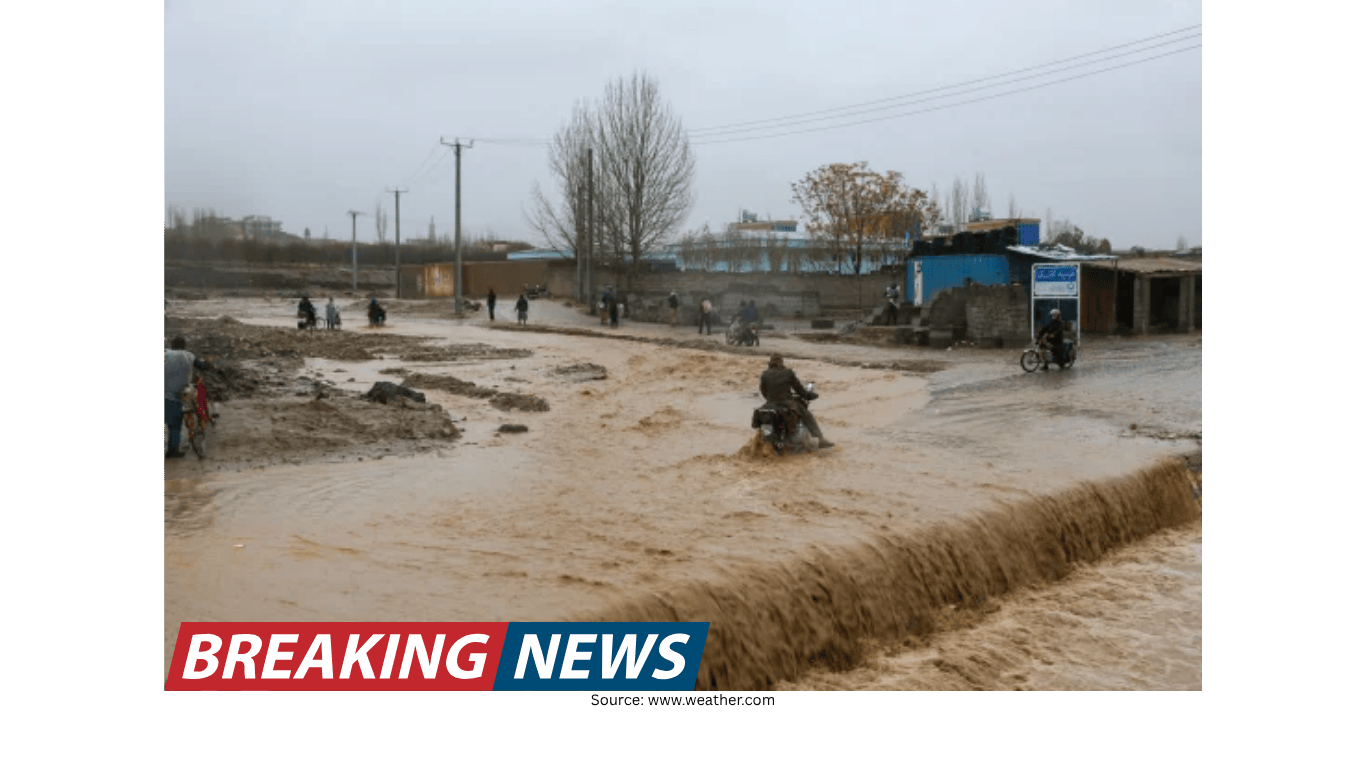
Afghanistan has been hit by a stretch of heavy rain and storms that has triggered widespread flooding, landslides and lightning strikes, resulting in significant loss of life and damage to infrastructure. Over the past 10 days, 77 people have been killed and 137 injured, according to the country’s Disaster Management Authority, which provided the latest figures on Saturday.
The authority said the most recent toll includes 26 people killed in the past 48 hours alone, underscoring how quickly conditions can deteriorate when rain continues to fall on already saturated ground. The effects have been felt across multiple areas, with reports of homes destroyed or damaged, roads washed out, and key travel routes disrupted.
Officials have also warned that the danger is not over. More rain has been forecast for the coming days throughout Afghanistan, prompting renewed public safety messages and heightened concern about further flooding and landslides.
Authorities warn residents to avoid flood-prone areas
With additional rainfall expected, the Disaster Management Authority urged the public to stay away from river banks and areas prone to flooding. Such warnings are particularly important during periods of sustained rain, when rivers can rise quickly and when slopes weakened by water can collapse without much notice.
In Afghanistan, the combination of heavy rain, rugged terrain and vulnerable infrastructure can turn storms into deadly events. Landslides and rockfalls can block roads with little warning, while fast-moving floodwaters can overwhelm communities and damage essential services.
The current advisory reflects the immediate risk posed by the forecast. It also highlights the broader challenge of preparing for repeated weather hazards in a country that has already experienced multiple deadly events this year.
Homes destroyed and families affected
The damage reported so far is extensive. The Disaster Management Authority said 793 homes have been completely destroyed and another 2,673 have been damaged. These figures point to the scale of disruption for households, many of which may be dealing not only with structural damage but also with the loss of belongings and the challenge of finding safe shelter.
Overall, more than 5,800 families have been affected, the authority said. In disasters involving floods and landslides, the impact on families often extends beyond immediate physical damage. Disrupted access to roads, markets and services can compound hardship, especially when storms and flooding persist over multiple days.
Alongside residential damage, officials reported harm to businesses, agricultural land, water wells and irrigation canals. These losses can be particularly serious in communities where livelihoods depend on local commerce and farming, and where water infrastructure is vital for both daily life and agriculture.
Roads and highways damaged, travel rerouted
Floods and landslides have also taken a heavy toll on transportation infrastructure. According to the Disaster Management Authority, 337 kilometers (about 210 miles) of roads have been destroyed. Damage of this magnitude can isolate communities and slow emergency response, while also making it harder for people to reach work, schools and medical care.
The Public Works Ministry said several highways connecting the capital to the provinces have been damaged, forcing travelers to take long, circuitous routes to reach Kabul. For many, that means longer travel times and increased risk, particularly when detours involve secondary roads that may also be vulnerable to flooding or debris.
Ashraf Haqshinas, a spokesman for the Public Works Ministry, said on Saturday that crews were working to reopen key routes. The ministry also warned travelers to be cautious when using roads in affected areas, a reminder that even when roads appear passable, conditions can change rapidly during ongoing storms.
Kabul–Jalalabad highway disrupted by landslides, rockfalls and flooding
Among the most significant routes affected is the Kabul to Jalalabad highway, described by officials as the main route linking the capital to the Pakistani border and eastern Afghan provinces. This corridor is crucial for travel and connectivity between Kabul and the east.
According to the Public Works Ministry, a landslide and rockfalls, as well as flooding, shut the highway on Thursday morning. The closure illustrates how multiple hazards can occur at the same time during severe weather: rain can trigger slope failures while also causing water levels to rise and inundate roadways.
Haqshinas said crews were working to reopen the road. In situations like this, reopening efforts can involve clearing debris, stabilizing slopes and repairing damaged surfaces—tasks that become more complex if rain continues.
Salang Pass closed amid flooding
Flooding has also shut the Salang Pass, a high mountain pass in the Hindu Kush mountain range that connects Kabul to the country’s north, including the major cities of Kunduz and Mazar-e-Sharif. The closure of such a strategic route can have wide-reaching effects, disrupting movement between regions and complicating logistics for travelers and transport.
Mountain routes can be particularly susceptible to weather impacts. Heavy rain can cause sudden runoff and washouts, while unstable slopes can produce landslides and rockfalls. When a major pass closes, traffic often shifts to alternative routes that may be longer and less reliable.
Damage extends beyond roads: agriculture and water systems hit
Beyond transportation, the Disaster Management Authority said businesses, agricultural land, water wells and irrigation canals have been damaged. These categories of loss point to broader economic and practical consequences that can linger after floodwaters recede.
Damage to agricultural land and irrigation canals can disrupt planting, harvesting and water management. Harm to water wells can affect access to clean water, creating additional challenges for families already coping with displacement or property damage.
When storms strike repeatedly, communities may face overlapping setbacks: repairs to canals and wells can take time, and damaged farmland may require restoration before it can be productive again. The authority’s figures emphasize that the current crisis is not limited to immediate casualties and road closures but includes impacts on daily necessities and livelihoods.
A country highly vulnerable to extreme weather
Afghanistan’s latest disaster comes in a year already marked by deadly extreme weather. The country’s Disaster Management Authority noted that dozens of people have died so far this year due to extreme weather events. Earlier in the year, heavy snowfall and flash floods left dozens of people dead across the country.
Officials and observers have long noted that Afghanistan is highly vulnerable to extreme weather events. The country’s geography includes mountain ranges and steep valleys where landslides can occur, while intense rainfall can quickly turn into flash flooding. When snow and heavy rain combine or arrive in rapid succession, the risk can increase further.
The pattern described by officials reflects the recurring nature of these hazards. Snow and heavy rain often trigger flash floods that kill scores, or even hundreds, of people at a time in Afghanistan. The country has seen severe outcomes in recent years, including a particularly deadly season in 2024.
Flash floods have caused mass casualties in recent years
The scale of the current impact—77 dead over 10 days—fits within a broader history of destructive floods in Afghanistan. Officials noted that in 2024, more than 300 people died in springtime flash floods. That figure underscores how quickly flood events can escalate into large-scale tragedies, particularly when multiple provinces are affected and when storms persist.
Flash floods are especially dangerous because they can develop rapidly, leaving little time for people to move to safety. In mountainous terrain, water can rush through narrow valleys with tremendous force. When combined with landslides, the hazards can multiply: debris can block waterways, redirect flows and increase the unpredictability of flooding.
The renewed forecast for rain in the coming days suggests that the risk remains elevated, and that communities may face additional disruptions even as they begin to assess the damage already done.
What officials are emphasizing now
At this stage, public messaging has focused on immediate safety and travel caution. The Disaster Management Authority has warned people to avoid river banks and flood-prone areas, while the Public Works Ministry has advised travelers to be cautious on roads in affected regions.
These warnings reflect the reality that hazards may persist even after a storm cell passes. Roads can remain unstable, slopes can continue to shed rocks and soil, and water levels can rise again with new rainfall upstream.
With crews working to reopen disrupted highways and with major routes like the Kabul–Jalalabad highway and the Salang Pass impacted, transportation conditions may remain fluid. For travelers, that can mean detours, delays and the need to monitor local conditions closely.
Key figures reported by authorities
- 77 people reported dead over the past 10 days
- 137 people reported injured
- 26 deaths reported over the past 48 hours
- 793 homes reported completely destroyed
- 2,673 homes reported damaged
- 337 kilometers (about 210 miles) of roads reported destroyed
- More than 5,800 families reported affected
Outlook: more rain expected
The forecast for more rain in the coming days is central to the evolving situation. Additional rainfall can worsen flooding in low-lying areas and increase the likelihood of landslides in mountainous regions. It can also slow repair work on roads and complicate efforts to restore access to key routes.
For now, authorities are emphasizing caution and avoidance of high-risk areas. The coming days will be critical in determining whether the current disaster stabilizes or expands, depending on how much rain falls and where it is concentrated.
As Afghanistan continues to face repeated episodes of extreme weather, the latest storm impacts serve as another reminder of the country’s exposure to floods, landslides and other hazards that can quickly become deadly and disrupt essential infrastructure.